Mobile Neuro-Physiotherapy Visits Across Eastern Province — 100% Home Delivery
•Eastern Province Scheduled Visits
Advanced In-Home Neurological Physiotherapy • Eastern Province
Live Home Visits Available

Complete vs Incomplete Spinal Cord Injury Rehabilitation Protocols

Delivering hospital-grade neurological physiotherapy directly into the comfort and dignity of your home in Eastern Province. We spare vulnerable patients the stress of transit, retraining neural pathways in the authentic home environment to restore functional independence.

100% dedicated in-home care with zero patient transportation hassle
Neuroplasticity-driven tailored protocols for stroke, SCI, MS, and gait disorders
Licensed Saudi Commission for Health Specialties (SCFHS) physical therapists
Standardized objective clinical metrics (Berg, Ashworth, TUG) tracking weekly gains
4.9/5 ⭐⭐⭐⭐⭐ (Trusted by 450+ families across Eastern Province)
Clinical triage response on WhatsApp within 15 minutes
Male & Female Specialists Available
Direct home visits scheduled in Dammam, Khobar, Dhahran, Qatif, Saihat, Jubail, & Al-Ahsa.
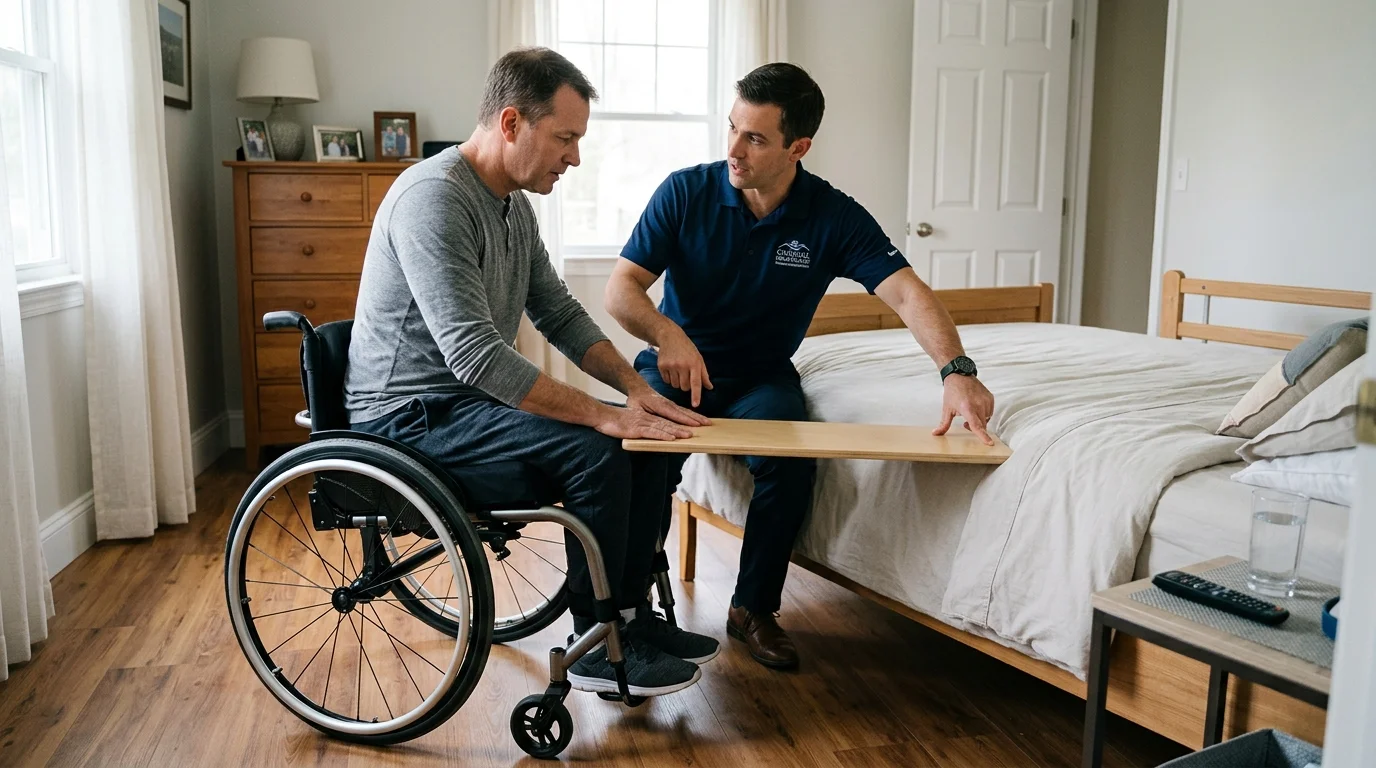
Spinal cord injury transfer training: teaching safe slide-board transfer mechanics from wheelchair to bed
1

Neurological and Biomechanical Rationale for Complete vs Incomplete Spinal Cord Injury Rehabilitation Protocols

Managing spinal cord injury demands precise clinical understanding of the neurological level of injury (ASIA Impairment Scale) and preserved motor pathways. The therapeutic objective extends beyond general strengthening into re-architecting biomechanical movement strategies for daily living tasks.

Bidaya clinicians carefully construct in-home practice environments, prioritizing the preservation of shoulder joint integrity, since the upper extremities assume the primary weight-bearing function for transfers and wheelchair propulsion.

Retraining preserved trunk and latissimus dorsi musculature to compensate for pelvic deficits.
Mastering static and dynamic seated equilibrium without continuous upper limb support.
Eliminating sheer forces during domestic transfers to protect vulnerable cutaneous tissue.
Coordinating closely with medical specialists to monitor cardiovascular and autonomic stability.
2

Functional Transfer Pathway & Domestic Clinical Safety

Our clinical pathway emphasizes hands-on mastery of bed, wheelchair, toilet, and vehicular transfers utilizing slide-board mechanics and the head-hips relationship.

Additionally, we institute structured 20-to-30-minute pressure relief routines during seated periods and guide families in selecting high-specification pneumatic cushions.

Graduated hands-on coaching in ergonomic transfer mechanics protecting caregiver lumbar spine.
Targeted stretching and passive range-of-motion protocols preventing joint contractures.
Comprehensive education regarding acute red flags such as autonomic dysreflexia.
Periodic functional milestone reassessment to advance independence goals safely.
3

Advanced In-Home Clinical Protocol and Targeted Motor Interventions for Spinal Cord Injury Rehabilitation

Bidaya's specialized in-home neurological rehabilitation is built upon the established principles of experience-dependent neuroplasticity and task-oriented motor relearning. We reject generic, unfocused exercises; instead, we engineer precision therapeutic pathways designed to rebuild interrupted synaptic connections and suppress pathological motor synergies.

Our clinical interventions incorporate Proprioceptive Neuromuscular Facilitation (PNF) diagonal patterns, sustained low-load elongation for hypertonic muscle groups, and isolated joint control retraining. We integrate portable Functional Neuromuscular Electrical Stimulation (NMES) to recruit dormant motor units and enhance ascending sensory feedback to the motor cortex.

Therapeutic volume, challenge, and resistance are dynamically calibrated during each visit based on neurological responsiveness and physical fatigue, with continuous monitoring of cardiovascular vitals to guarantee uncompromised clinical safety in the patient's Eastern Province residence.

Facilitating selective motor control outside stereotypic mass synergistic patterns.
Applying deep proprioceptive input to recalibrate spatial limb awareness and coordination.
Progressive motor task structuring to stimulate synaptogenesis and cortical plasticity.
Documenting longitudinal functional progress shared with treating hospital neurologists.
4

Domestic Safety Protocols and Caregiver Empowerment for Spinal Cord Injury Rehabilitation

Family members and domestic caregivers form the core foundation of sustained neurological recovery; while direct clinical sessions provide concentrated neuroplastic stimulation, the patient spends the remaining hours within the household. Bidaya clinicians dedicate structured time during every visit to instruct caregivers in safe biomechanical handling and transfer techniques.

We coach family members in ergonomic transfer mechanics between bed, sofa, and wheelchair using the head-hips relationship to protect the caregiver's lumbar spine while prompting active patient effort. We also detail structured 2-hour positional rotation schedules to eliminate pressure injury risks and joint stiffness.

Additionally, we provide a customized, illustrated Home Exercise Program (HEP) for safe physical activity between professional sessions, establishing an empowering 24-hour home rehabilitation environment.

Strict prohibition of traction on the paretic shoulder to prevent subluxation and chronic pain.
Implementing 2-hour bed repositioning schedules for patients with severely limited mobility.
Utilizing supportive anatomical pillows to preserve symmetrical musculoskeletal alignment.
Encouraging active patient self-care in daily living to foster functional autonomy and confidence.
5

Residential Adaptation and Specialized Mobile Clinical Field Logistics in Eastern Province

Residential villas and homes in Eastern Province feature expansive layouts, wide corridors, and open majlis halls that provide an exceptional natural setting for neurological rehabilitation. However, these residences may also present physical hazards, such as polished stone flooring and threshold steps, requiring proactive environmental management.

During our initial home visits in Eastern Province, Bidaya clinicians perform a comprehensive environmental safety audit, providing practical guidance on securing floor rugs, installing sturdy bathroom grab bars, and optimizing seating heights to facilitate natural sit-to-stand transitions.

Furthermore, our clinical routes in Eastern Province are coordinated by district clusters to ensure punctuality, bypassing arterial highway traffic and bringing specialized clinical expertise directly to your residence.

Screening domestic pathways, room thresholds, and bathroom transfer zones for fall risks.
Optimizing seating ergonomics in residential living areas to support independent standing.
Eliminating the physical exhaustion and expense of passenger transport across urban highways.
Flexible in-home appointment scheduling aligned with family availability and medication cycles.
6

Clinical Prevention of Secondary Complications in Spinal Cord Injury Rehabilitation

Comprehensive neurological care for Spinal Cord Injury Rehabilitation requires proactive prevention of secondary complications resulting from immobility. Unaddressed motor deficits often lead to joint contractures, disuse osteoporosis, dependent peripheral edema, and reduced pulmonary ventilation.

Bidaya integrates active and passive full-range joint mobility exercises, structured weight-bearing standing protocols, and rhythmic calf muscle pumping to support venous circulation. In addition, diaphragmatic breathing exercises maintain pulmonary expansion and safeguard respiratory vitality.

Sustained stretching routines to preserve ankle and knee flexibility and prevent contractures.
Therapeutic standing protocols to maintain bone mineral density and reduce spastic hypertonia.
Circulatory facilitation exercises to prevent dependent peripheral edema and venous thrombosis.
Diaphragmatic re-expansion drills to preserve respiratory compliance and prevent chest complications.
7

Clinical Governance, Objective Documentation, and Quality Benchmarks at Bidaya

Bidaya operates under rigorous clinical governance frameworks benchmarked against international standards in neurological physiotherapy. Our in-home service emphasizes standardized, objective outcome documentation to track patient progress over time.

At regular intervals, our clinical team compiles digital progress summaries detailing functional score improvements and future therapy goals. This report facilitates multidisciplinary coordination with treating neurologists across Eastern Province hospitals, delivering transparent, evidence-based care.

Employing standardized clinical scales to evaluate balance, motor strength, and daily autonomy.
Sharing comprehensive digital progress reports with treating physicians and family members.
Strict compliance with professional healthcare ethics, data confidentiality, and patient privacy.
Weekly clinical peer reviews to adjust therapeutic dosage and milestones based on patient response.
8

Long-Term Motor Maintenance & Self-Directed Care Pathways for Spinal Cord Injury Rehabilitation

Neurological recovery is a continuous, cumulative process requiring persistent synaptic stimulation to consolidate motor gains and prevent regression. Bidaya implements a graduated transitional care pathway moving the patient from high-intensity direct therapy to sustained autonomous domestic physical activity.

We instruct patients and families on integrating exercise tasks into habitual daily life—such as active weight shifting while standing, utilizing the affected limb during light domestic activities, and walking safely along residential corridors—ensuring enduring neuromuscular vitality.

Designing an enduring daily home exercise regimen that prevents functional deconditioning.
Periodic monthly clinical follow-ups to re-evaluate balance metrics and walking velocity.
Updating home exercise challenges to match the patient's evolving motor capabilities.
Fostering psychological resilience and active participation in family and social life.
9

Clinical Safety Standards and Emergency Red Flag Triage for Spinal Cord Injury Rehabilitation

Patient safety is the supreme clinical imperative at Bidaya. We enforce strict vital signs screening protocols prior to, during, and subsequent to every in-home physical therapy encounter. Clinicians monitor blood pressure, resting heart rate, and oxygen saturation to confirm physiological stability.

In the event of acute red flag indications—such as severe hypertensive spikes, sudden altered mental status, acute focal neurological deterioration, or cardiac distress—therapy is suspended immediately, and emergency protocols are activated to coordinate urgent medical attention.

Pre-exercise vital signs verification confirming physiological exercise tolerance.
Immediate detection and management of orthostatic hypotension or exertion-induced dizziness.
Clear clinical protocols for managing acute hypertonicity flares or sudden balance loss.
Family education regarding emergency red flags requiring immediate hospital emergency care.
10

Advanced In-Home Clinical Protocol and Targeted Motor Interventions for Spinal Cord Injury Rehabilitation

Bidaya's specialized in-home neurological rehabilitation is built upon the established principles of experience-dependent neuroplasticity and task-oriented motor relearning. We reject generic, unfocused exercises; instead, we engineer precision therapeutic pathways designed to rebuild interrupted synaptic connections and suppress pathological motor synergies.

Our clinical interventions incorporate Proprioceptive Neuromuscular Facilitation (PNF) diagonal patterns, sustained low-load elongation for hypertonic muscle groups, and isolated joint control retraining. We integrate portable Functional Neuromuscular Electrical Stimulation (NMES) to recruit dormant motor units and enhance ascending sensory feedback to the motor cortex.

Therapeutic volume, challenge, and resistance are dynamically calibrated during each visit based on neurological responsiveness and physical fatigue, with continuous monitoring of cardiovascular vitals to guarantee uncompromised clinical safety in the patient's Eastern Province residence.

Facilitating selective motor control outside stereotypic mass synergistic patterns.
Applying deep proprioceptive input to recalibrate spatial limb awareness and coordination.
Progressive motor task structuring to stimulate synaptogenesis and cortical plasticity.
Documenting longitudinal functional progress shared with treating hospital neurologists.
11

Domestic Safety Protocols and Caregiver Empowerment for Spinal Cord Injury Rehabilitation

Family members and domestic caregivers form the core foundation of sustained neurological recovery; while direct clinical sessions provide concentrated neuroplastic stimulation, the patient spends the remaining hours within the household. Bidaya clinicians dedicate structured time during every visit to instruct caregivers in safe biomechanical handling and transfer techniques.

We coach family members in ergonomic transfer mechanics between bed, sofa, and wheelchair using the head-hips relationship to protect the caregiver's lumbar spine while prompting active patient effort. We also detail structured 2-hour positional rotation schedules to eliminate pressure injury risks and joint stiffness.

Additionally, we provide a customized, illustrated Home Exercise Program (HEP) for safe physical activity between professional sessions, establishing an empowering 24-hour home rehabilitation environment.

Strict prohibition of traction on the paretic shoulder to prevent subluxation and chronic pain.
Implementing 2-hour bed repositioning schedules for patients with severely limited mobility.
Utilizing supportive anatomical pillows to preserve symmetrical musculoskeletal alignment.
Encouraging active patient self-care in daily living to foster functional autonomy and confidence.
Free Self-Check

Is In-Home Neuro Rehabilitation Suitable for Your Case?

Answer 4 brief questions to determine whether in-home physical therapy matches your mobility goals and care needs.

Frequently Asked Clinical Questions

Q

How does specialized in-home therapy promote autonomy in Complete vs Incomplete Spinal Cord Injury Rehabilitation Protocols?

It trains patients to utilize preserved musculature with biomechanical efficiency, mastering transfer skills and wheelchair control directly at home.

Q

Do you advise on wheelchair ergonomics and specialized seating?

Yes, our clinicians evaluate chair dimensions, back support alignment, and pressure-relieving pneumatic or gel cushions to prevent pressure ulcers.

Q

What are the primary warning signs of Autonomic Dysreflexia?

Sudden pounding headache, profuse sweating above injury level, and acute hypertension; an emergency requiring immediate sitting upright, stimulus removal, and 997 triage.

Q

Can individuals with cervical tetraplegia achieve self-feeding?

Yes, utilizing passive tenodesis wrist extension mechanics and adaptive utensils, patients can achieve independent feeding when C6 wrist extension is preserved.

Q

What is the typical duration of an in-home clinical session?

Sessions generally span 45 to 60 minutes of intensive functional training structured to prevent muscle fatigue and protect joint structures.

Q

How can families arrange an in-home evaluation in the Eastern Province?

Contact Bidaya via official phone or WhatsApp to register clinical history and schedule an initial diagnostic home visit.

Regional Coverage Matrix

In-Home Spinal Cord Injury Rehabilitation Across Eastern Province

Our licensed neuro-physiotherapists deliver home-based rehabilitation programs to patients' residences in the following major cities:

Bidaya Neuro-Rehabilitation Clinical Review BoardClinical Governance
Multidisciplinary Physical Therapy & Neurological Care Panel — Eastern Province
Last Clinical Review: 2026-09-03
Editorial Standards
Evidence-Based Clinical References
  • Kirshblum SC, et al. International standards for neurological classification of spinal cord injury. Top Spinal Cord Inj Rehabil. 2020.
  • Harvey LA. Physiotherapy rehabilitation for people with spinal cord injuries. J Physiother. 2016.
  • Consortium for Spinal Cord Medicine. Early acute management in adults with spinal cord injury. 2008.
  • Saudi Ministry of Health. Clinical Standards for Spinal Injury Care. MOH Portal. 2023.
Clinical Governance & Care Standards

Why Families Trust Bidaya Home Neuro-Rehab

Evidence-informed neurological care delivered with domestic safety, medical ethics, and documented functional recovery.

100% Dedicated In-Home Care

Eliminates transportation strain and clinical waiting times for neurological patients.

Licensed Clinical Professionals

Qualified physical therapists trained in adult neurological rehabilitation.

Standardized Outcome Measures

Baseline assessment and objective tracking using validated international metrics.

Caregiver & Family Training

Instruction on safe transfer mechanics, positioning, and daily home routines.

Exclusive Neurological Focus

Specialized clinical programs tailored to stroke, Parkinson's, and mobility disorders.

Eastern Province Wide Coverage

Scheduled home care visits covering Dammam, Khobar, Dhahran, Qatif, Jubail, and Al-Ahsa.

All clinical sessions are scheduled following an initial in-home clinical needs assessment.