1
Neurological and Biomechanical Rationale for Cervical Tetraplegia Functional In-Home Care & Supported Mobility
Managing spinal cord injury demands precise clinical understanding of the neurological level of injury (ASIA Impairment Scale) and preserved motor pathways. The therapeutic objective extends beyond general strengthening into re-architecting biomechanical movement strategies for daily living tasks.
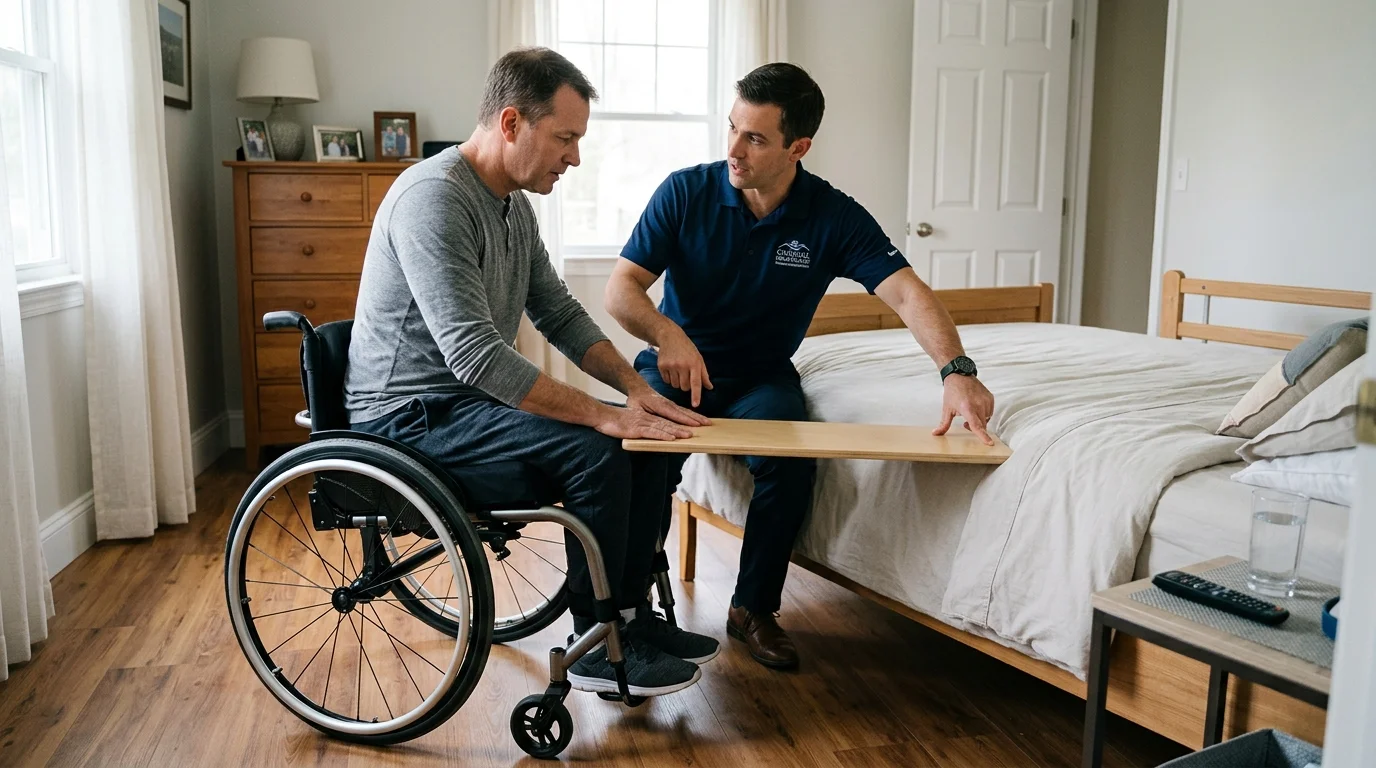
Bidaya clinicians carefully construct in-home practice environments, prioritizing the preservation of shoulder joint integrity, since the upper extremities assume the primary weight-bearing function for transfers and wheelchair propulsion.
Retraining preserved trunk and latissimus dorsi musculature to compensate for pelvic deficits.
Mastering static and dynamic seated equilibrium without continuous upper limb support.
Eliminating sheer forces during domestic transfers to protect vulnerable cutaneous tissue.
Coordinating closely with medical specialists to monitor cardiovascular and autonomic stability.